What Electrical Requirements Does an Induction Cooktop Need?
Thinking about putting an induction cooktop into your Queensland home? Sort out the electrical side first. These cooktops pull power differently to the old electric or gas ones, so the wiring behind them matters.
Most induction cooktops in Queensland homes run off a dedicated 230-240V circuit, and plenty of models draw between 20 and 32 amps. Your existing wiring may need an upgrade to carry that safely.
Two things decide your induction cooktop power requirements: the total kilowatt rating of the model you have picked, and whether your house is single-phase or three-phase. Get those two answers together before you order anything.
A few high-end cooktops want three-phase power, which runs at 380-415V AC, 50Hz. That is not common in houses, but it is worth checking the specs on the model you like. A licensed electrician can look over your switchboard and wiring and tell you what needs doing before the cooktop goes in.
The Questions We Get Asked Most About Induction Cooktops
These are the ones that come up on nearly every job. Here are the quick answers from our licensed electricians:
| Question | Quick Answer |
|---|---|
| Do I need 3-phase power for an induction cooktop? | Most homes don’t. Only high-end or large cooktops (typically over 7.4kW) may need 3-phase. |
| What wiring do I need for an induction cooktop? | A dedicated circuit with 6mm² or 10mm² cabling, depending on amperage and run length. |
| How many amps does an induction cooktop need? | Most require 20-32 amps. Always check the product specs. |
| What size circuit breaker do I need? | Usually a 32-amp breaker is required for standard residential models. |
| What cable size do I need? | Generally 6mm² cable for 32 amps. Longer cable runs may need 10mm². |
| Can I plug in an induction cooktop? | Portable ones, yes. Built-in models must be hardwired by a licensed electrician. |
| Do I need a safety switch as well? | Yes. The circuit is RCD protected at the switchboard, and there is a separate isolation switch near the cooktop. |
| Will my existing switchboard handle it? | Only if it has a spare way, working RCD protection and enough capacity. Your electrician checks the board before quoting. |
Professional Electrical Installation
In Queensland, a built-in induction cooktop has to be installed by a licensed electrician. Most units need their own dedicated circuit sized to the cooktop’s power draw.
A qualified electrician will:
- Check your home’s existing wiring
- Check the switchboard has a spare way and working RCD protection
- Run the dedicated circuit back to the board
- Fit an isolation switch
- Set up surge protection to guard against power spikes
- Make sure the work meets Australian electrical standards
What it costs depends on your home’s existing setup and whatever upgrades it needs. Your electrician can tell you on the day whether you need extra cabling or a switchboard upgrade.
Will My Switchboard Handle an Induction Cooktop?
Sometimes yes, sometimes no. It comes down to four things your electrician looks at before anything gets ordered.
- A spare way. The new dedicated circuit needs its own breaker, so there has to be room on the board for it.
- RCD protection. The cooktop circuit is protected by a safety switch. Older boards often have none, or only cover part of the house.
- The condition of the board. Ceramic fuses or heat-damaged wiring usually mean the board gets replaced rather than added to.
- The supply into the house. The mains and the main switch have to carry the new load on top of everything already running.
A full switchboard upgrade is not always needed. Plenty of boards have a spare way and are in good order, and the job is just the new circuit.
Swapping a Gas Cooktop for Induction
This is the one that catches people out. A kitchen that has always cooked on gas usually has no cooking circuit behind the cooktop at all, just a power point for the ignition. So there is nothing there to plug an induction cooktop into.
The electrical job is a new dedicated circuit run from the switchboard to the cooktop, with its own breaker, RCD protection and an isolation switch. That means getting into the wall or the ceiling to run the cable, so book it before the cabinetmaker starts.
Disconnecting and capping the old supply is a separate licensed trade and a separate job. The electrical side is what we handle, and on a changeover it is normally the bigger half of the work.
How an Induction Cooktop Works
Induction cooktops heat with a magnetic field instead of a hot element. That makes them quicker, more efficient and safer than the older electric or gas cooktops, and it gives you tighter control over the heat.
The Basic Idea
Copper coils under the ceramic glass create a magnetic field. Sit a compatible pot or pan on top and that field passes energy straight into the cookware.
The pan becomes the heat source while the glass stays relatively cool. That is why so little energy goes to waste compared with other cooktops.
You do need magnetic cookware, like cast iron or the right stainless steel. Easy test: if a fridge magnet sticks to the base of the pan, it will work on induction.
Why People Like Them
Induction gets a pan hot faster than a conventional electric element. It backs off just as fast when you turn the heat down.
The surface stays cool to the touch, which is a lot safer with kids about. Spills do not bake on either, so a quick wipe and you are done.
They are cheaper to run too. Induction cooktops put most of their energy into the pan rather than into the room, so less of what you pay for is wasted.
You also get fine control. The heat adjusts in small steps, which is handy for anything delicate like melting chocolate or holding a simmer.

Wiring Requirements in Queensland
An induction cooktop only runs safely on the right power setup. Get the circuit, breaker and cable right and it will perform properly for years.
Voltage and Frequency
Most induction cooktops run on standard single-phase power: 220-240V AC at 50Hz. That is exactly what a Queensland home already supplies.
A few high-end models want three-phase power at 380-415V AC, 50Hz. You see those more in commercial kitchens than in houses.
The cooktop’s power rating decides which you need. Most residential units sit between 3.7kW and 7.4kW and run fine on single-phase.
Circuit Breaker and Dedicated Circuit
An induction cooktop needs its own dedicated circuit, so nothing else shares that line.
A licensed electrician fits a circuit breaker rated for your particular cooktop. Most residential units need:
- A 20-32 amp circuit breaker
- Heavy-duty cable
- Direct hardwiring back to the switchboard
Safety Switch (RCD) at the Switchboard
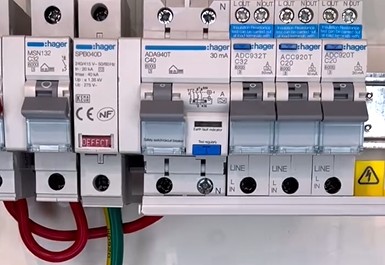
The cooktop circuit is protected by an RCD, the safety switch on your switchboard. It is the device that cuts the power if current starts leaking to earth, which is what protects the person, not just the appliance.
It is a separate device from the isolation switch on the wall and from the circuit breaker. Older boards often have no RCD protection at all, or cover only the power points, so it gets sorted at the same time as the cooktop.
Isolation Switch (Kill Switch)
To meet Australian electrical standards (AS/NZS 3000:2018 Wiring Rules), a dedicated isolation switch has to go in near the cooktop. It lets you cut the power fast in an emergency or for maintenance. It needs to be easy to reach, usually within two metres of the cooktop, but not sitting directly above it or anywhere awkward.
Standards and Compliance
The install has to meet the AS/NZS 3000 Wiring Rules. There is also a 50mm minimum clearance from the front edge of the benchtop to the cooktop cut-out.
A surge arrestor is a must to protect the cooktop’s electronics from power spikes. A lot of manufacturers won’t honour the warranty without one.
Your electrician has to give you a Certificate of Compliance once the job is done. That is the document proving the work meets Queensland safety standards and the building codes.
Installation Considerations
Fitting an induction cooktop takes a bit of planning, both for the wiring and for the space it sits in. Get the clearances right and the unit runs cooler and lasts longer.
Built-In or Portable
A portable single-zone unit plugs into an ordinary power point and needs no electrical work at all. That is the only kind you can set up yourself.
A built-in cooktop is different. It is hardwired onto its own circuit by a licensed electrician, and it cannot be run off a standard power point or an extension lead.
Ventilation and Clearances
An induction cooktop needs room to breathe. Enough clearance lets the heat escape and stops the electronics underneath running too hot.
Required Clearances:
- Front: at least 50mm between the front edge of the benchtop and the cooktop cut-out.
- Base: at least 100mm between the cooktop base and any safety barrier.
- Overhead: enough room for the rangehood, as per the manufacturer’s specs.
- Sides: follow the manufacturer’s guidelines for side spacing.
Good airflow around the unit keeps it running well and helps it last. Some models want extra space underneath for cooling, and the numbers differ from one cooktop to the next, so always check the manufacturer’s recommendations before you cut into any cabinetry.
Energy Use and Running Costs
Induction is a cheap way to cook in a Queensland home, and it takes some load off your power bill along the way.
How Much Power It Draws
Because the heat goes straight into the pan, very little is wasted heating the air around it. How much it draws at any moment depends on how many zones are running and how high they are set.
The number that matters for the wiring is the total kilowatt rating on the compliance plate. That is what the circuit gets sized from.
How It Compares
A conventional electric element has to heat itself first, then the pan. Induction skips that step, because the pan is the element. Less of what you pay for goes into warming up the cooktop.
Barely any heat spills into the room either, since the surface stays cool. That keeps the kitchen cooler and takes a bit of load off the air conditioner through a Queensland summer.
Water comes to the boil faster too.
Frequently Asked Questions
What electrical requirements does an induction cooktop need in Queensland? Most residential induction cooktops in Queensland need a dedicated circuit with a 240V single-phase supply drawing 20 to 32 amps. The circuit needs its own breaker, RCD protection at the switchboard, an isolation switch within two metres of the cooktop, surge protection, and it must be hardwired by a licensed electrician. Every install has to comply with the AS/NZS 3000:2018 Wiring Rules.
How many amps does an induction cooktop use? Most residential induction cooktops draw between 20 and 32 amps at full load. A standard 60cm four-zone cooktop usually needs a 32-amp dedicated circuit. Always check your own model’s specs, as the draw ranges from 3.7kW to 7.4kW on single-phase residential units.
What size circuit breaker do I need for an induction cooktop? Most standard residential cooktops need a 32-amp breaker on a dedicated circuit, so no other appliance shares that line. Your electrician confirms the right breaker size for your specific model and cable run length.
What cable size do I need for an induction cooktop? Generally 6mm² cable suits a standard 32-amp induction cooktop circuit. A longer run from the switchboard to the cooktop may need 10mm² to avoid voltage drop. Your electrician works out the correct size from your kitchen layout.
Do I need three-phase power for an induction cooktop? Most Brisbane homes don’t. Single-phase handles the majority of residential models up to 7.4kW. Only high-end or large cooktops, usually above 7.4kW, need three-phase at 380 to 415V. Check your model’s specs or have a licensed electrician assess your home.
Will my existing switchboard handle an induction cooktop? Only if it has a spare way for the new breaker, working RCD protection and enough capacity on the mains. Older boards with ceramic fuses or no safety switch usually get upgraded at the same time. Plenty of boards are fine as they are and only need the new circuit added.
Do I need a safety switch for an induction cooktop? Yes. The cooktop circuit is RCD protected at the switchboard. The RCD is the device that trips when current leaks to earth, so it protects the person using the cooktop. It is a separate thing from the circuit breaker and separate again from the isolation switch on the wall.
Do I need an isolation switch for an induction cooktop in Queensland? Yes. Under the AS/NZS 3000:2018 Wiring Rules, a dedicated isolation switch has to go in near the cooktop, usually within two metres and somewhere easy to reach. It lets you cut the power quickly in an emergency or for maintenance.
What electrical work is needed to change from a gas cooktop to induction? A new dedicated circuit, in almost every case. A kitchen that has only ever cooked on gas has no cooking circuit behind the cooktop, just a power point for the ignition, so the cable has to be run from the switchboard with its own breaker, RCD protection and an isolation switch. Disconnecting the old supply is a separate licensed trade.
Can I install an induction cooktop myself in Queensland? No. A built-in induction cooktop has to be hardwired by a licensed electrician in Queensland. DIY electrical work is illegal, unsafe, and will void the cooktop’s warranty. Your electrician also gives you a Certificate of Compliance on completion, confirming the install meets Queensland safety standards.
Does an induction cooktop need surge protection? Yes. A surge arrestor protects the cooktop’s electronics from power spikes, and many manufacturers require one as a condition of the warranty. Your electrician fits it as part of the dedicated circuit.
How much does it cost to install an induction cooktop in Brisbane? It depends on your home’s existing setup. If the switchboard has spare capacity and the kitchen sits close to the board, it is cheaper. New cabling, a switchboard upgrade, or three-phase power all push the cost up. A licensed electrician can give you a fixed quote after a look at your home.
What clearances does an induction cooktop need? At least 50mm between the front edge of the benchtop and the cooktop cut-out, at least 100mm between the cooktop base and any safety barrier, and enough overhead room for the rangehood. Side clearances vary by brand, so always check the specs before you touch the cabinetry.
Getting an induction cooktop put in around Brisbane? Call Precision Electrical & Air on 0423 163 359 and we will sort the circuit, the isolation switch and the compliance certificate, all done properly. Induction Cook Top Installation Brisbane