An air conditioner leaking water inside the house is a problem many Brisbane homeowners notice once the humid weather arrives. Water dripping from the indoor unit, a wet patch on the wall under a split system or a brown stain on the ceiling below a ducted system all point to the same thing: the water your air conditioner pulls out of the air is not draining away the way it should.
Most leaks come from a short list of causes. Some of them you can check yourself in a few minutes. Others involve the refrigerant, the electrical parts or the inside of the indoor unit, and those need a licensed technician. This guide explains the usual causes, the safe checks you can do, and when it is time to book an air conditioning repair or service with Precision Electrical & Air.
Key Takeaways
- A leaking indoor unit usually means the condensate water has nowhere to go because the drain line is blocked, kinked or does not fall away from the unit.
- A dirty filter can starve the unit of airflow until the coil ices up, and the melting ice can overflow the drain tray.
- Cleaning the filter and checking the outside end of the drain hose are safe things to do yourself.
- Anything involving refrigerant, wiring or the inside of the indoor unit is work for a licensed air conditioning technician.

Why Is My Air Conditioner Leaking Water Inside?
Your air conditioner is leaking water inside because the condensate it collects is escaping before it reaches the drain. When the system cools, warm and humid air passes over a cold coil in the indoor unit. Moisture in that air turns to water on the coil, runs into a drain tray and leaves the house through a drain hose. A leak means something in that path has stopped working.
Brisbane’s humid summers mean the coil collects a lot of water on a typical day, so a small fault in the drain shows up quickly as drips or a damp wall. Our guide to Brisbane humidity and air conditioning explains how humidity affects comfort in your home and when to use Dry mode.
Samsung’s Australian support page lists the main reasons water leaks from an indoor unit: the unit is not level, the drain hose faces upwards, is bent or has its end sitting in water, or the drain hole is clogged because the unit has not been cleaned for a long time (Samsung Australia, What should I do when water drops fall from my air conditioner?).
A Blocked Condensate Drain Is the Usual Cause of an Air Conditioner Leaking Water
A blocked drain line or a dirty filter is the usual reason an air conditioner is leaking water inside. Dust and grime that get past the filter slowly build up in the drain tray and the drain line. Once the water cannot get past that build up, it backs up and spills over the edge of the tray instead of flowing out through the hose.
On a wall mounted split system, you may first notice water dripping from the bottom of the indoor unit or running down the wall beneath it. On a ducted system, the indoor unit and its drain tray usually sit in the roof space, so the first sign may be a water stain on the ceiling near the unit. Some systems also use a small condensate pump to push the water out, and LG notes that if that pump fails, the water cannot be pumped outside (LG, Air conditioner indoor unit leaking).
Clearing a blocked drain properly means flushing the tray and the full length of the drain line, and checking that the water runs freely to the outlet. We do this as part of a professional air conditioner clean, which includes the drain and condensate line, and we check the condensate drain for blockages at every service.
Can an Iced Up Coil Make an Air Conditioner Leak Water?
Yes, an iced up coil can make an air conditioner leak water. LG’s support guide explains that frost can build up in the indoor unit and water may leak when the air filter is clogged. When the ice melts, there can be more water than the drain tray can hold.
There are two usual reasons a coil ices up. The first is a dirty filter. LG explains that a clogged filter restricts airflow, which can freeze the coil, and as the ice melts the drain tray can overflow. You can fix that one yourself by cleaning the filter. The second is low refrigerant, which LG also lists as a cause of a frozen coil. Low refrigerant means there is a leak somewhere in the refrigerant circuit, and that is not something a homeowner can or should fix.
Signs that ice is the problem include weak or warm airflow and frost or ice you can see on the coil behind the front cover. If you clean the filter and the coil still ices up, book a repair so a technician can test the refrigerant circuit.
How an Installation Problem Can Cause an Air Conditioner to Leak Water
An installation problem can cause an air conditioner to leak water when the indoor unit or its drain hose does not have enough fall for the water to run away by gravity. Samsung’s Australian page says to use a level to make sure the unit is mounted correctly and sitting flat, and to check that the drain hose points downward and is not bent, because water can otherwise flow back into the unit.
Examples include a drain hose that runs uphill from the unit, a hose that is bent, a hose whose end sits in standing water, and an indoor unit that is not sitting level. Samsung also mentions rainwater getting in through the hole in the wall where the pipes pass through, which needs to be sealed properly.
Fixing the fall means levelling the indoor unit or rerouting the drain hose so the water runs downhill. The refrigerant pipes and electrical connections run behind the same unit, so moving it or its hose is work for a technician. If you are planning a new system, our air conditioning installation page covers new installs in Brisbane.
Other Reasons You May See Water Around Your Air Conditioner
Not all water around an air conditioner is a fault. Samsung’s Australian page explains that dew can form on the air outlet blade when the cooling set temperature is low, the room is very humid, the fan speed is low or the blade angle is wrong. It suggests a cooling set point of around 26°C, a higher fan speed, and running Dry mode for a few hours on very humid days.
Older systems can also leak because the drain tray itself is worn, rusted or damaged, which LG lists as another cause. If you are unsure whether the water you are seeing is normal, take a photo and describe it when you call us.
What to Check Yourself When Your Air Conditioner Is Leaking Water
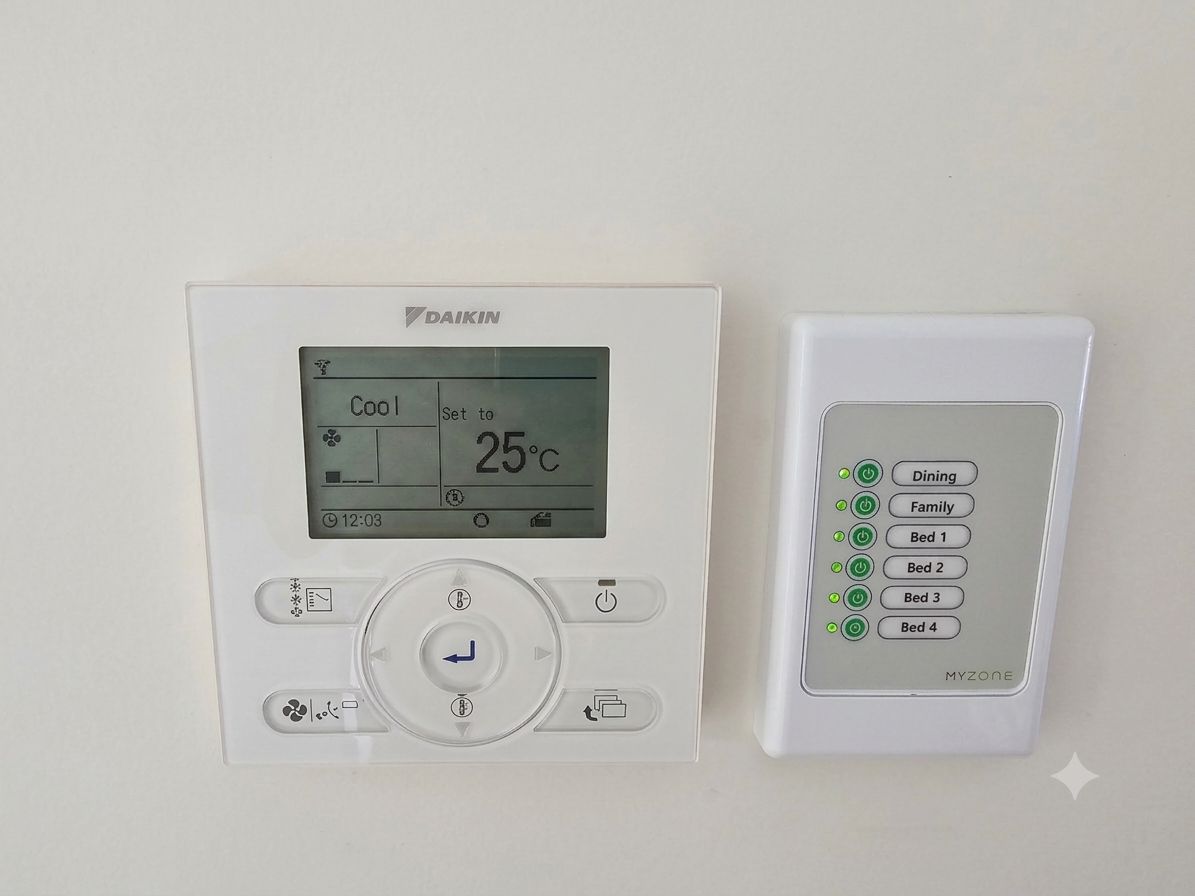
When your air conditioner is leaking water, there are a few safe checks you can do before you call a technician. Start by turning the system off at the remote or wall controller, and place a towel or bucket under the leak to protect the floor and wall. If water is running near the power point, the isolator or any electrical part of the unit, leave the system off until a technician has looked at it.
- Clean the filter if your owner’s manual shows how to remove it from behind the front cover.
- Look at the drain hose outside and check that it runs downhill and is not kinked or crushed.
- Check that the end of the hose is not sitting in standing water.
- Note whether the leak happens while the system is running or after it is switched off.
- Take photos of the leak, any stains and the controller display if it shows an error code.
Please do not open the indoor unit beyond the filter cover, poke wire or tools into the drain, spray the coil, or touch the wiring or the refrigerant pipes. If the leak stops after you clean the filter and run the system for a day, you have probably found the cause. If it keeps leaking, our air conditioner troubleshooting guide covers other symptoms worth noting before your visit.
When an Air Conditioner Leaking Water Needs a Licensed Technician
An air conditioner leaking water needs a licensed technician when the simple checks have not stopped it, or when the cause is inside the unit, in the refrigerant circuit or in the electrical parts. In Australia, the National EPA says you must hold the appropriate Refrigerant Handling Licence to install, commission, service or maintain refrigeration and air conditioning equipment (National EPA, Refrigeration and air conditioning technicians).
Book a technician if any of these apply:
- The unit keeps leaking after you have cleaned the filter.
- You can see ice on the coil or on the refrigerant pipes.
- The air is weak or warm, or the system switches itself off.
- There is a water stain on the ceiling under a ducted system.
- Water is getting near the power point, isolator or wiring.
- An error code is showing on the controller.
Precision Electrical & Air holds an electrical contractor licence and a Refrigerant Trading Authorisation from the Australian Refrigeration Council, and our technicians hold refrigerant handling licences. That matters for leaks because the fix can involve the drain, the refrigerant and the electrical side of the system on the same visit. If low refrigerant is the cause, we locate and repair the refrigerant leak before we recharge the system. The National EPA gives technicians the same advice: fix any leaks before recharging a system.
What Happens When We Repair an Air Conditioner Leaking Water
When we repair an air conditioner leaking water, the technician first finds out where the water is coming from and why. That means checking the filter, the drain tray, the drain line and any condensate pump, testing the electrical connections and checking the refrigerant circuit if the coil has been icing up. We explain the fault and give you the cost of the repair before any work starts.
Once you approve the quote, we clear the drain, correct the fall, replace a damaged tray or pump, or repair a refrigerant leak, depending on what we found. We then test the system and check that it is cooling properly before we leave. We repair split systems, multi head split systems and ducted air conditioning from all the major brands across Brisbane’s southside, including Sunnybank, Calamvale, Mount Gravatt, Moorooka and Forest Lake.

Frequently Asked Questions About an Air Conditioner Leaking Water
Is it safe to keep using an air conditioner that is leaking water?
It is best to turn the air conditioner off until you know the cause. Water can damage plasterboard, ceilings and floors, and a leak near the power point or the electrical parts of the unit is a safety risk. If the leak stops after you clean the filter, you can try running it again and watch for drips.
Why is my split system leaking water only after I turn it off?
A split system that leaks after it is switched off may have ice on the coil. When the system stops, the ice melts and can overflow the drain tray. A dirty filter is a common reason the coil ices up, and low refrigerant is another. If cleaning the filter does not stop the leak, book a technician to check the refrigerant circuit.
Can I clear a blocked air conditioner drain myself?
You can check that the outside end of the drain hose is clear, runs downhill and is not sitting in water. Clearing the drain tray and the line inside the indoor unit means opening the unit near the wiring, so we recommend leaving that to a technician as part of a clean or service.
Why is water dripping from the ceiling near my ducted air conditioner?
On a ducted system, the indoor unit and its drain tray usually sit in the roof space, so a blocked drain, a failed condensate pump or a damaged tray can show up as a stain or drips on the ceiling. Turn the system off and book a technician, because the unit and its wiring sit in the roof space where a homeowner should not be working on them.
Does a regular service stop an air conditioner leaking water?
A regular service lowers the chance of a leak because the technician checks the condensate drain for blockages, cleans the filters and coils, and checks the refrigerant. It cannot prevent every fault, but it can catch dirt building up in the drain before the water starts dripping into your home.
Book an Air Conditioner Leak Repair in Brisbane
If your air conditioner is leaking water and the filter and drain hose checks have not stopped it, call Precision Electrical & Air on 0423 163 359 or send us an enquiry. Tell us where the water is coming from, whether it is a split or ducted system, and when the leak happens. We will explain whether you need a repair or a service before we book your visit.
Sources: Samsung Australia, What should I do when water drops fall from my air conditioner?, retrieved 2026-10-30. LG, Air conditioner indoor unit leaking, retrieved 2026-10-30. National EPA, Refrigeration and air conditioning (RAC) technicians, retrieved 2026-10-30.