Ceiling Fans with Air Conditioning: How Brisbane Homeowners Save Up to 30% on Cooling Costs
Ceiling Fans Are a Cheap Way to Cool a Brisbane Southside Home
Southside Brisbane summers are hot and sticky, and most homes here run air conditioning to cope. Add a ceiling fan into the mix and your air conditioner has less work to do.
Here’s how the two work together, and what a proper install involves.
Run a ceiling fan with your air conditioner and you can usually lift the thermostat a couple of degrees without feeling any warmer. The moving air gives you a wind chill effect, so the room feels cooler than the number on the wall says, and every degree you don’t have to force the compressor to reach is less strain on your power bill.
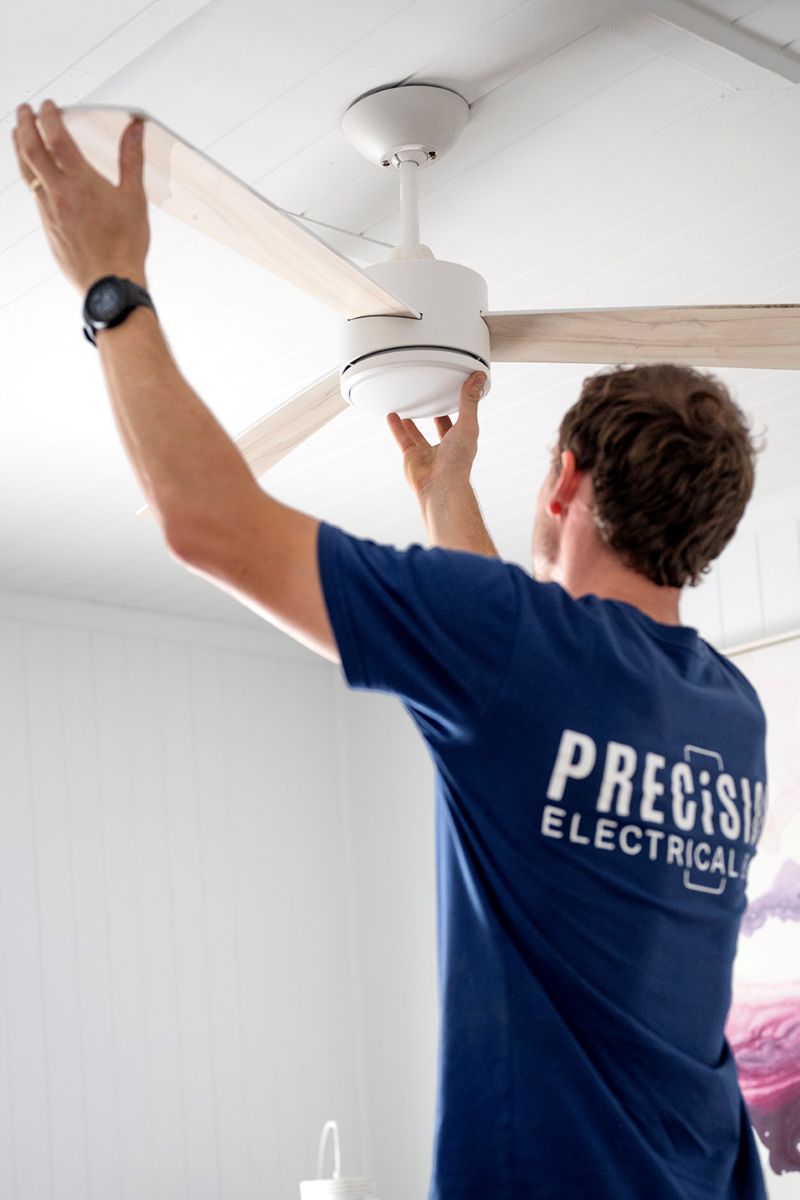
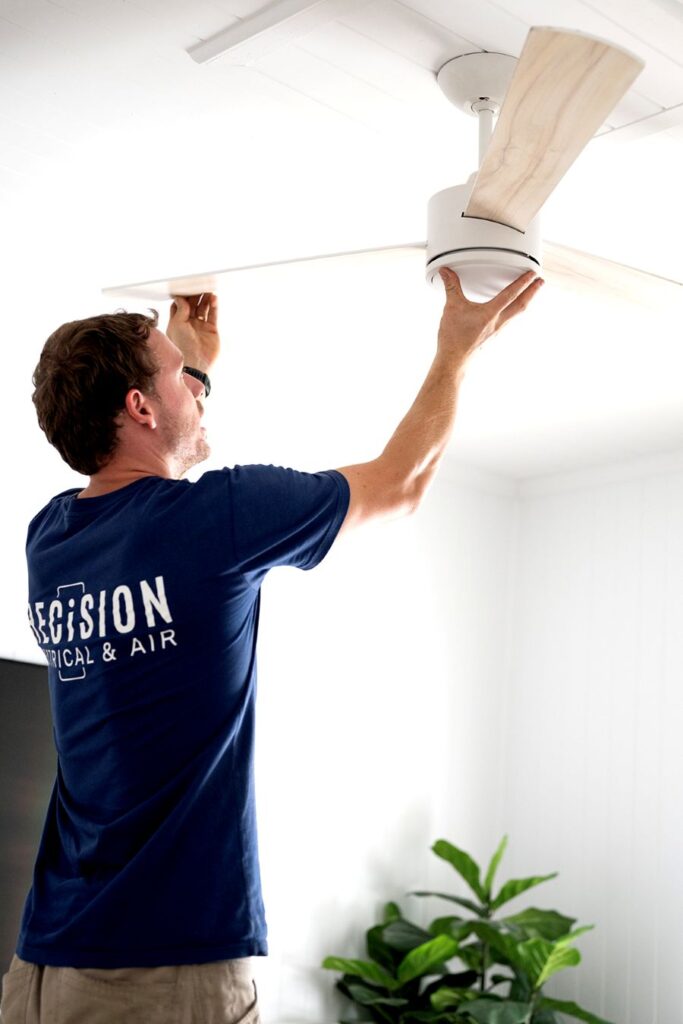
A licensed electrician can fit fans in most rooms in a couple of hours. They have to be fixed to a ceiling joist or a fan-rated bracket so they run steady, with no wobble.
Why the Install Has to Be Done Properly
A fan that’s mounted right runs quietly for years. Get the install wrong and you end up with wobble, noise, or worse. Here’s what a proper job comes down to.
Safety Comes First
The fan has to be fixed to a proper electrical box that’s screwed into a ceiling joist or support beam. A fan hung off a standard light fitting can drop, and that’s how people get hurt.
The wiring also has to meet Australian electrical standards, which is a job for a licensed electrician. Blades need to sit at least 2.1 metres above the floor and 30 centimetres clear of the walls, and they should be balanced and done up tight. A loose blade can work its way free while the fan is spinning, and at that speed it does real damage.
Getting the Airflow Right
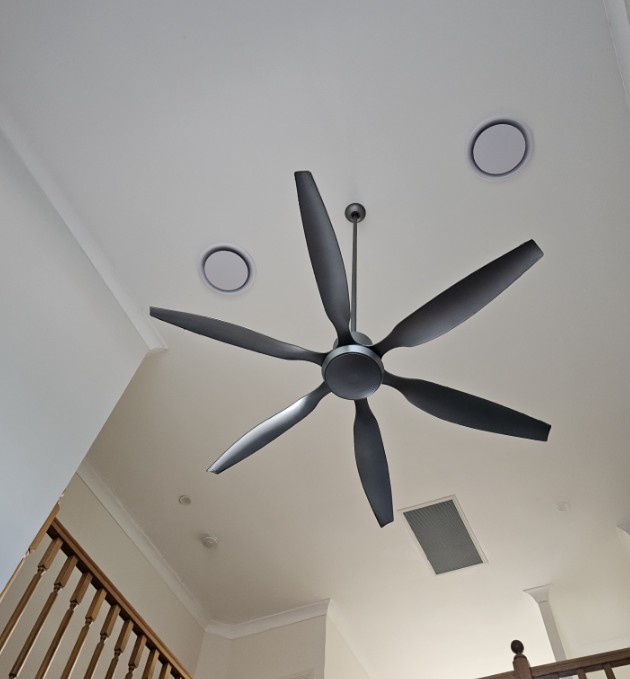
Height decides how well a fan moves air. On a standard 2.4-metre ceiling, a flush mount works fine. For higher ceilings, an extension rod drops the fan down into the 2.1 to 2.4-metre sweet spot.
Blade pitch wants to sit between 12 and 15 degrees for good air movement. Run the fan anticlockwise in summer and clockwise in winter, and keep the blades clean and balanced, since dust and an out-of-balance blade both cut airflow and start the fan ticking or humming.
Pro tip: match the fan to the room. A 1.2-metre fan handles a space up to around 12 square metres, and bigger rooms want a fan up to 1.5 metres across.
How a Fan Makes Your Air Conditioner Work Better
A ceiling fan and an air conditioner do different jobs. The air conditioner cools and dries the air, and the fan spreads that cool air around so you feel it. Put them together and you get an even, comfortable room for less running cost.
Moving the Cool Air Around
Left on its own, an air conditioner lets cool air pool near the floor while it stays warmer up near the ceiling. A ceiling fan pushes that cool air back down and moves it through the room, so you lose the hot and cold patches you often get with air conditioning on its own.
That breeze across your skin is what makes a warmer room still feel comfortable, because your body sheds heat faster in moving air.
Lower Running Costs
Run the fan with the air conditioner and you can generally set the thermostat a couple of degrees higher for the same comfort, and every degree higher you can set it means less time the compressor spends working.
A ceiling fan draws a fraction of what an air conditioner does. It’s a small motor sipping power in the background compared to a compressor doing the heavy lifting, so the fan is carrying real load for next to nothing on your bill.
A Longer Life for the Air Conditioner
When a fan is helping, the air conditioner doesn’t have to work as hard. Fewer on-off cycles means less wear on the parts that cost the most to replace.
Because the room reaches temperature faster and holds it, the unit spends less time running, which takes strain off the compressor and fan motors: the parts you least want to lose early.
Getting the Most Out of a Ceiling Fan in Brisbane
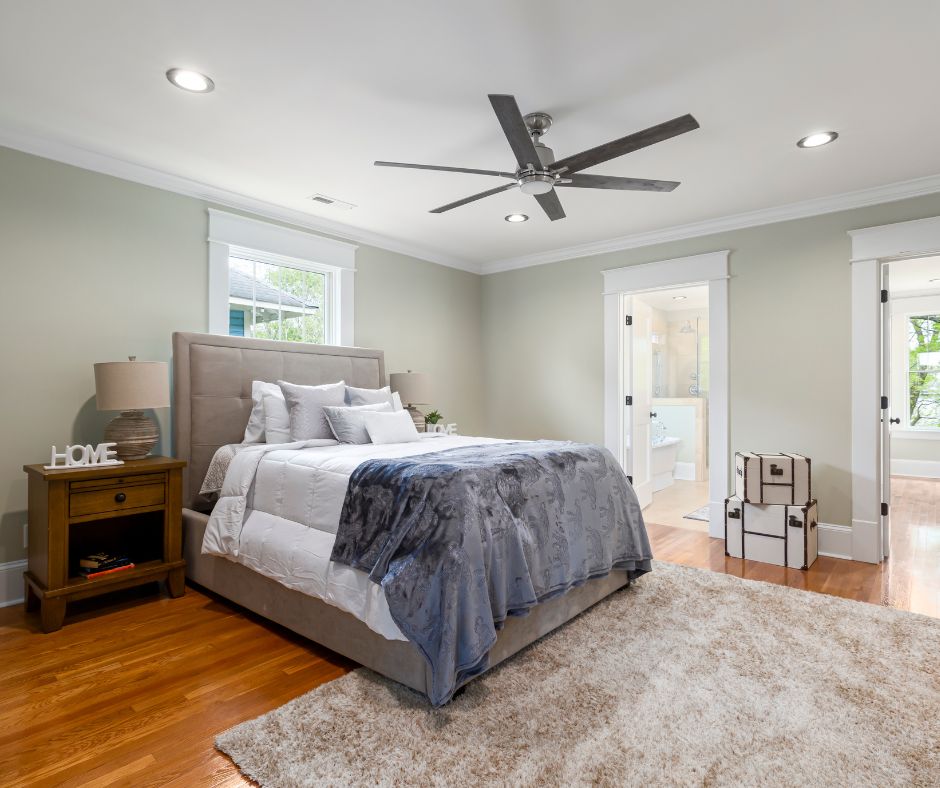
Two things decide how well a fan performs: which way it spins, and whether it suits the room. Get both right and you get more cooling for less power.
Change the Direction with the Season
Through a Brisbane summer, run the fan anticlockwise. That drives air straight down and gives you a cooling breeze. On mild winter days, flick it to clockwise on low, and that gentle updraft pulls the warm air that’s gathered at the ceiling back down into the room.
The switch to change direction sits on the motor housing. Wait until the fan has stopped fully before you flip it, or you can damage the switch.
Match the Fan to the Room
Your fan size should suit the size of the room:
| Room Size | Recommended Fan Diameter |
|---|---|
| Up to 4m² | 90-105cm |
| 4-6m² | 105-132cm |
| 6-9m² | 132-152cm |
| Over 9m² | 152cm or larger |
Mount the fan 2.1 to 2.4 metres off the floor for the best airflow, and leave at least 50cm between the blade tips and the walls. That gap stops the air churning and keeps the fan running smooth. On a sloped ceiling, use an extension rod to keep it at that height.
Coping with Brisbane’s Humidity
Our subtropical weather brings the humidity that makes a house feel sticky and close. A ceiling fan running with the air conditioner is the combination that keeps a southside home comfortable without pushing your energy costs up.
Beating the Sticky Air
A fan keeps air moving across your skin, which helps sweat evaporate, and that’s what actually cools you down on a muggy day. It’s the difference between feeling clammy and feeling comfortable.
That same air movement stops moisture settling in corners and quiet spots, which helps keep mould from taking hold in a Brisbane home. Keep the fan anticlockwise through summer so it drives air down and gives you the most cooling effect.
Running Fans and Air Conditioning Together
With the fan going, you can generally lift the air conditioner a couple of degrees and not notice the difference, which takes a real bite out of your running costs over a Brisbane summer. The fan also spreads the cool air evenly instead of letting it sink to the floor while the warm air sits up top.
What you get out of it:
- Less work for your air conditioner
- A more even temperature through the room
- Lower running costs
- Better comfort when it’s humid
For the best result, put the fan in the centre of the room, 2.1 to 2.4 metres above the floor.
Frequently Asked Questions
Should I use a ceiling fan with my air conditioner?
Yes. Running a ceiling fan with your air conditioner lets you raise the thermostat a couple of degrees without losing comfort. The fan creates a wind chill effect that makes the room feel cooler than it is, and it spreads the air conditioner’s output evenly instead of letting it pool near the floor. Less compressor time means a lower running cost over summer.
Which way should a ceiling fan spin in summer?
Anticlockwise in summer. That drives air straight down and gives you a cooling breeze across your skin. In winter, switch to clockwise on low speed to bring the warm air that’s risen to the ceiling back down into the room. The switch sits on the motor housing and should only be flipped once the fan has stopped.
What size ceiling fan do I need for my room?
Match the fan to the room: up to 4m² suits a 90 to 105cm fan, 4 to 6m² suits 105 to 132cm, 6 to 9m² suits 132 to 152cm, and rooms over 9m² want 152cm or larger. A fan that fits the room moves air across the whole space without churning it up near the walls.
How high should a ceiling fan be installed?
The blades should sit 2.1 to 2.4 metres above the floor for good airflow and safety. On a standard 2.4-metre ceiling, use a flush mount, and for higher ceilings, use an extension rod to bring the fan down to the right height. Keep at least 30cm between the blades and the ceiling, and 50cm between the blade tips and the walls.
Do ceiling fans help with humidity in Brisbane?
Yes. Brisbane’s subtropical humidity makes moving air genuinely useful for comfort. A ceiling fan keeps air moving across your skin, which speeds up sweat evaporation and helps you feel cooler on a muggy day. It also stops moisture settling on surfaces, which lowers the risk of mould in corners and quiet spots.
Do I need an electrician to install a ceiling fan in Brisbane?
Yes. A ceiling fan has to be fixed to a ceiling joist or a fan-rated bracket and wired to meet Australian electrical standards. This isn’t optional, it’s the law, and a fan that’s not mounted properly is a genuine safety risk. A licensed electrician can fit most fans in a couple of hours and make sure the job is safe, compliant and free of wobble.
Thinking about ceiling fans for your place? Give the team at Precision Electrical & Air a call on 0423 163 359 and we’ll sort out the right fans, in the right spots, wired up safe. Ceiling Fan Installation Brisbane